Lecture 3 · CCMUN 2026 UNGA2 · ~8 min
Women as Agents of Change & the Path to Equitable Climate Governance
From Christiana Figueres to Grassroots Entrepreneurs — How Women Lead Climate Action
Learning Objectives
- Identify concrete examples of women's leadership in climate governance at international, national, and local levels
- Analyze how women's participation in green entrepreneurship and resource management produces measurable environmental outcomes
- Explain the concept of epistemic justice and why Indigenous and women's knowledge systems must be integrated into climate policy
- Evaluate the effectiveness of different approaches to promoting women's participation in climate governance
- Synthesize the lecture series (Lectures 1-3) into a coherent framework for understanding inclusive climate governance
- Formulate concrete policy recommendations that a GA2 delegate could advocate for
Introduction · From Victims to Agents
Women on the Frontlines of Climate Action
"As climate change intensifies, women and girls face mounting threats to their rights, livelihoods, health and safety. But at the same time, they are on the frontlines, leading community responses that build resilience, protect ecosystems and advance social justice."
— CCMUN 2026 UNGA2 Background Guide
Lecture 1 established the conceptual framework: climate governance must be inclusive. Lecture 2 documented the problem: climate change disproportionately harms women across health, agriculture, and displacement. This lecture completes the arc by asking a different question: what are women already doing to solve the climate crisis?
We will examine four domains of women's agency: decision-making at the highest levels of climate governance; green economy and entrepreneurship at the community level; knowledge systems and epistemic justice; and the path forward for inclusive climate governance.
Core Argument: Women are not merely victims of climate change — they are critical political actors, knowledge holders, and agents of transformation. The challenge for climate governance is not to "save" women, but to remove the structural barriers that prevent their leadership.
Leadership · Decision-Making
Women as Climate Decision-Makers
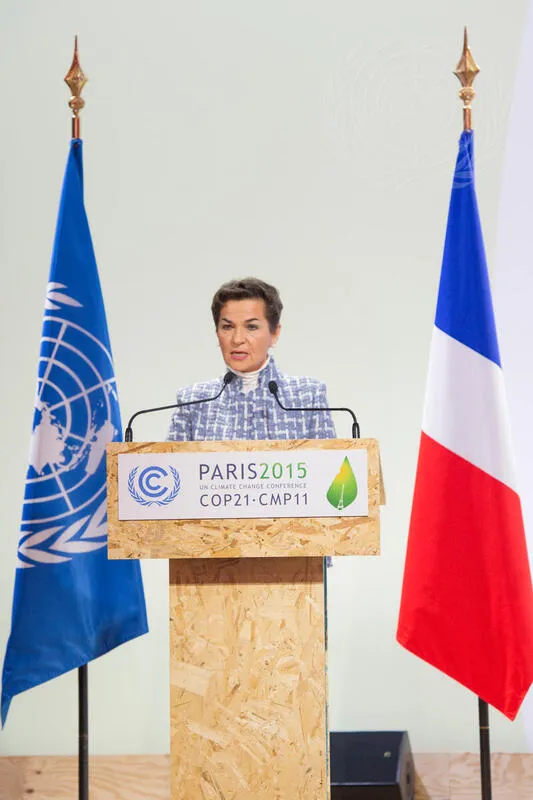
Christiana Figueres, Executive Secretary of UNFCCC, addresses the High-level Segment of COP21 in Paris, 7 December 2015. Photo: UN Photo/Eskinder Debebe
When women hold decision-making power, climate action often transcends linear thinking and achieves greater progress by balancing equity and effectiveness. The evidence is compelling.
Christiana Figueres — Architect of the Paris Agreement
As Executive Secretary of the UN Framework Convention on Climate Change, Christiana Figueres employed an inclusive, decentralized strategy rooted in what she called "feminine energy" to forge consensus through multi-stakeholder dialogue. Under her leadership, the historic Paris Agreement was adopted in 2015 — a treaty that for the first time explicitly acknowledged gender equality in climate action.
Rwanda — Women Legislators Driving Green Growth
Rwanda boasts the highest proportion of women in parliament globally. Female legislators have systematically embedded gender equality at the core of climate action through national legislation, playing a decisive role in advancing the "Green Growth and Climate Resilience Strategy." Research confirms that peace agreements where women have strong influence are almost always reached and sustained.
The pattern is clear: women's participation is not simply a normative issue. When women lead, climate governance becomes more inclusive, more effective, and more durable.
Green Economy · Entrepreneurship
Women in the Green Economy and Resource Management
Women interact with natural resources, manage local ecosystems, and run businesses in ways that are essential to the green transition. Yet their contribution is systematically undervalued.
Water Management in Tajikistan
In Tajikistan, farmers often face severe water shortages. Yet 13 women across the country now serve as directors of water users' associations. Their responsibilities include overseeing seasonal irrigation schedules, allocating water based on each household's crop needs, inspecting and organizing repairs to main canals, and establishing water fee standards. These women are not just participating — they are actively driving climate solutions at the local level.
Forest Management in India and Nepal
Studies show that forest management improves measurably with women's participation. Both India and Nepal have guidelines requesting 50% women in forest management committees, and Nepal has about 800 women-only groups. The result is healthier forests and stronger governance.
Green Entrepreneurship
Women account for 12.6% of the workforce in India's 63 million Micro, Small and Medium Enterprises — the second-largest sector after agriculture. In South Africa, a concentrated solar power project requires at least 3% procurement from women-owned vendors and ensures at least 50% of technical training participants are women. From India to South Africa, women are making renewable energy more inclusive.
Knowledge · Epistemic Justice
Whose Knowledge Counts in Climate Governance?
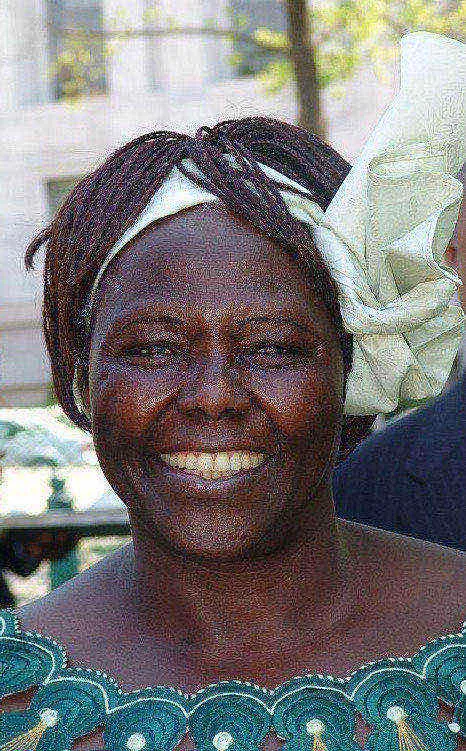
Wangari Maathai, 2004 Nobel Peace Prize laureate and founder of the Green Belt Movement. Photo: Kingkongphoto, CC BY-SA 2.0
"There is no climate justice without epistemic justice, and epistemic justice starts with recognizing the knowledge that women have always known."
— CCMUN 2026 UNGA2 Background Guide
In climate change discussions, there are clear hierarchies of knowledge. There is a tendency to prioritize top-down technological solutions and a strong reliance on male-dominated disciplines such as physical sciences and engineering. This hierarchy privileges quantitative over qualitative data, and "measurable" over "lived-world" knowledge — knowledge that is often held by women and Indigenous peoples.
Wangari Maathai — The Green Belt Movement
The late Nobel Peace Prize laureate Wangari Maathai's Green Belt Movement mobilized rural women in Kenya to plant tens of millions of trees, closely linking reforestation with women's empowerment and democratic advocacy. Her work proved that women are among the most resilient forces in ecological restoration and community education.
Firesticks Alliance — Indigenous Women's Knowledge
The Firesticks Alliance, led by Indigenous Australian women, advocates for systematically incorporating traditional knowledge of cultural burning — preserved across generations of women — into national fire management policies. This knowledge, developed over tens of thousands of years, is increasingly recognized as essential for managing Australia's fire-prone landscapes in an era of climate change.
Epistemic justice demands that these knowledge systems — held by women, Indigenous peoples, and local communities — are not merely consulted but placed at the center of climate governance.
Forward · Policy & Action
The Path Forward: From Analysis to Action
This lecture series has traced a journey: from understanding the institutional framework of GA2 and the evolution of inclusive climate governance (Lecture 1), to documenting the disproportionate impacts of climate change on women (Lecture 2), to recognizing women as agents of change (Lecture 3). What does this mean for policy?
Key Policy Directions for GA2 Delegates
- Gender-responsive climate finance: Ensure that Green Climate Fund projects include mandatory gender impact assessments and that a proportion of funds is directly allocated to women-led organizations.
- Inclusive representation mandates: Advocate for binding targets for women's representation in national climate delegations and decision-making bodies.
- Data disaggregation: Call for gender-disaggregated data collection in all climate impact assessments, health planning, and disaster response frameworks.
- Recognition of unpaid care work: Integrate women's unpaid care labor into national climate adaptation plans and disaster risk reduction strategies.
- Support for women-led enterprises: Create dedicated funding windows for women's green entrepreneurship and ensure procurement policies prioritize women-owned businesses.
- Knowledge system integration: Establish formal mechanisms for incorporating Indigenous and local knowledge into climate policy-making at all levels.
Summary · Series Conclusion
Three Lectures, One Framework
L1
Understand the institution + conceptual evolution
L2
Document the gendered impacts
L3
Recognize women as agents + chart the path forward
The unifying thread across this course:
- Climate governance is a justice issue, not just an environmental one. GA2 is the right forum for this discussion because climate change is fundamentally tied to economic cooperation, development, and resource distribution.
- Gender-blind policy is not neutral — it reinforces inequality. From missing maternal health in climate plans to excluding women from climate finance, structural neglect compounds the disproportionate impacts women face.
- Women are already leading solutions. From Christiana Figueres at the international level to women water managers in Tajikistan to Indigenous fire practitioners in Australia — women are driving climate action across every domain.
- The task for GA2 delegates is to remove barriers, not create dependency. The goal of inclusive climate governance is not to "save" vulnerable populations but to dismantle the structural inequalities that prevent their full participation.
Reflection · Think Further
Questions for Deeper Reflection
💭 Thinking Questions
- [Comprehension] Identify three concrete examples of women's leadership in climate action discussed in this lecture, at different levels (international, national, local).
- [Analysis] Compare the leadership approach of Christiana Figueres during the Paris Agreement negotiations with the grassroots approaches of the Green Belt Movement. What do they have in common?
- [Evaluation] The lecture argues for "epistemic justice" in climate governance. Do you agree that integrating Indigenous knowledge systems is essential, or are there risks and limitations to this approach?
- [Synthesis] Drawing on all three lectures, draft a 1-minute opening statement for GA2 that frames inclusive climate governance as an economic and development priority, not just a human rights issue.
📚 Further Reading
- UN Women (2023). Feminist Climate Justice: A Framework for Action (full report)
- Kormos, R. (2024). Intertwined — on Indigenous knowledge and climate
- UNFCCC. Gender Action Plan (text and progress review)
- UN Women. Women's Participation in Peace and Climate Processes
—— End of Lecture 3 ——
End of UNGA2 Delegate Training Series