Lecture 2 · CCMUN 2026 UNGA2 · ~9 min
The Gendered Impacts of Climate Change
Health, Food Security, Displacement — How Climate Crises Disproportionately Affect Women and Girls
Learning Objectives
- Identify the main pathways through which climate change disproportionately impacts women's health and well-being
- Analyze the structural factors that make women smallholder farmers more vulnerable to climate-induced food insecurity
- Explain why climate-induced displacement is not gender-neutral and how it amplifies protection risks
- Evaluate the gaps in current climate policy that neglect gender-specific health and livelihood needs
- Compare the gendered impacts across different regions using case studies from Bangladesh and Somalia
- Connect these impacts to the broader framework of climate justice discussed in Lecture 1
Introduction · Why Climate is Not Gender-Neutral
Climate Change Amplifies Existing Inequalities
"Climate change can reinforce existing inequalities when climate policies and resource-allocation systems do not account for gendered differences in livelihoods, care responsibilities, mobility, health needs and political participation."
— CCMUN 2026 UNGA2 Background Guide
Climate change is not a gender-neutral phenomenon. When climate policies and resource allocation systems fail to account for gendered differences — in livelihoods, care responsibilities, mobility, health needs, and political participation — they systematically reinforce existing inequalities.
This lecture examines the main channels through which women and girls are disproportionately affected: health, agriculture and food security, and climate-induced displacement. For each dimension, we will look at both the physiological and structural factors that amplify women's vulnerability, and examine why global climate policy continues to neglect these gendered dimensions.
Key Question: How do climate impacts travel through gendered social structures — and what does this reveal about the inadequacy of gender-blind climate policy?
Health · Physical & Mental
Climate Change as a Health Emergency for Women
Climate change imposes a multifaceted, systemic threat to women's health, with direct impacts on physiological, reproductive, and mental well-being, worsened by structural inequities in healthcare access. The World Health Organization's review of 119 national climate plans found that only 23 explicitly include maternal health protection — a staggering indicator of structural neglect.
Physical Health Risks
Extreme heat directly triggers pregnancy complications and increased stillbirth risk. Air pollution crosses the placental barrier, causing fetal growth restriction. In coastal Bangladesh, women face 4.14 times higher gastrointestinal diseases and 82% report menstrual irregularities linked to unsafe water. In Kenya, 32% of pregnant women in arid regions reported missing prenatal checkups during droughts due to impassable roads.
Mental Health Crisis
Climate-induced anxiety, depression, and PTSD are significantly higher among women than men. In Cambodia, 77% of people reported worsened mental health due to slow-onset climate hazards, with women more affected. In South Sudan, climate change is pushing women into negative coping mechanisms — early marriage, child marriage, and transactional sex — behaviors that are both outcomes of economic pressure and sources of psychological trauma.
23/119
National climate plans that include maternal health (WHO review)
4.14×
Higher GI disease risk for women in coastal Bangladesh
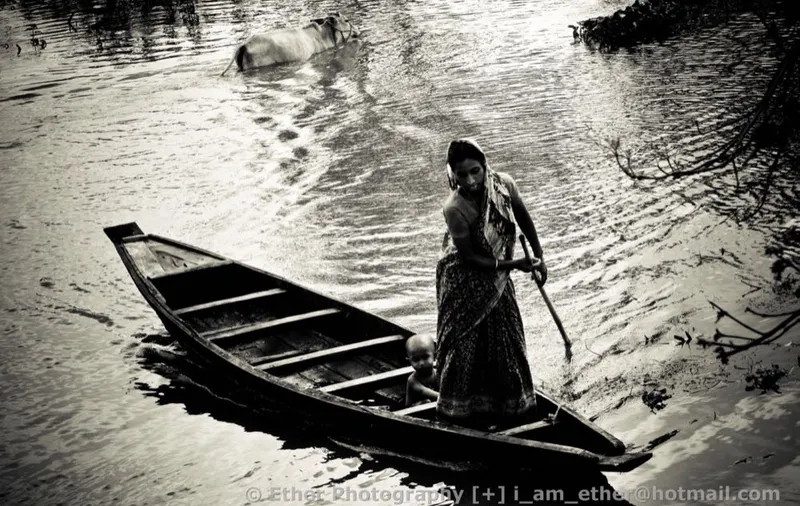
[Photo: Women in a climate-vulnerable community in Bangladesh — illustrating the salinization, GI disease, and maternal health impacts. Source: Wikimedia Commons / CC license. Caption to be verified by user.]
Agriculture · Food Security
Women Smallholder Farmers: First Line of Defense, Last to Receive Support
Women make up 43% of the agricultural workforce in developing countries. They are the first line of defense for global food security yet the last recipient of climate finance. Their labor is systematically undervalued while their risks are systematically ignored.
Disproportionate Productivity Losses
Gender-based disparities in climate-induced agricultural losses have become a critical yet overlooked dimension of global food security. Indian women paddy farmers work 15-20% longer but earn 30-40% less. The FAO notes women produce 20-30% less due to limited access to inputs, credit, and extension services. The climate crisis does not distribute agricultural productivity losses neutrally — women farmers bear several times greater economic losses than men.
Food Insecurity and Nutrition
The gendered impacts extend beyond production into household consumption. Women are often the last to eat and first to sacrifice nutrition for their families. In Kenya, 78% of women skipped meals to feed children during drought. Droughts increased child marriage by 25% in Ethiopia. Globally, 60% of chronically hungry people are women and girls, and today 47.8 million more women face food insecurity than men.
43%
Women's share of agricultural workforce in developing countries
60%
Of chronically hungry people are women and girls
47.8M
More women face food insecurity than men
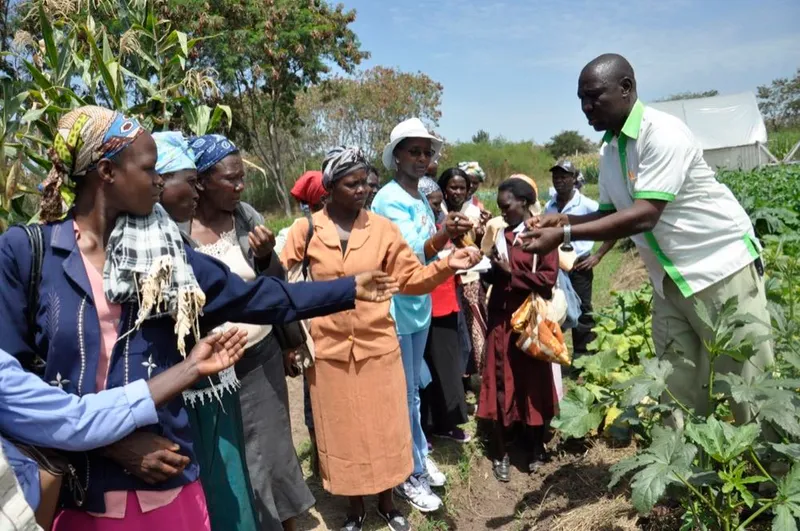
[Photo: Women smallholder farmers in a developing country — illustrating the 43% agricultural workforce statistic. Source: Wikimedia Commons / CC license. Caption to be verified by user.]
Displacement · Migration
Climate-Induced Displacement: A Gendered Crisis
Climate-induced migration is not a gender-neutral phenomenon. It systematically exposes women and girls to compounded vulnerabilities at every stage of displacement — from the decision to leave, to the risks encountered en route, to the precarious conditions in destinations.
Of the estimated 1.2 billion people expected to be displaced by climate extremes by mid-century, four out of every five are women and girls. Already, 75% of the 120 million forcibly displaced people globally live in countries heavily impacted by climate change, and women and girls constitute the overwhelming majority.
Compounding Risks: Following Hurricane Katrina, the rate of rape among women displaced to trailer parks rose 53.6 times the baseline rate in Mississippi. In Somalia, where drought has overtaken conflict as the primary driver of displacement, women-headed households face compounded protection risks — barriers to accessing aid, heightened exposure to gender-based violence, and reduced social protection.
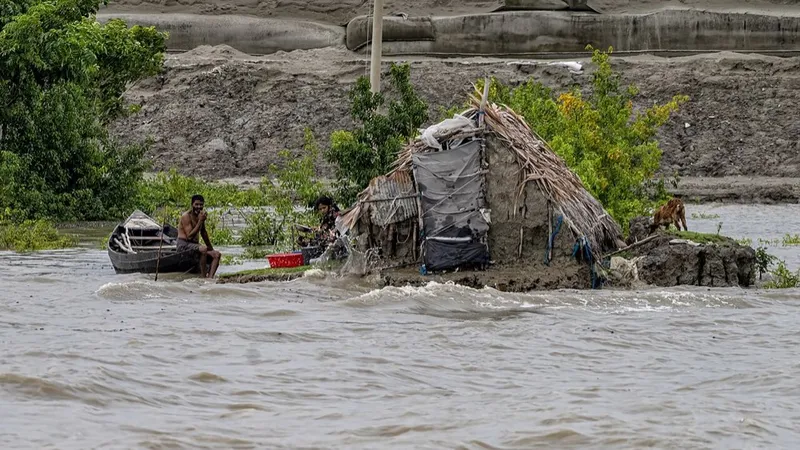
[Photo: Climate-displaced women and families — illustrating the gendered displacement crisis. Source: Wikimedia Commons / CC license. Caption to be verified by user.]
The pattern is structural: men often migrate for new opportunities while women stay behind, taking on extra workloads in managing households and farms alone. When women do move, they encounter systems designed without their safety or needs in mind.
Case Studies · Bangladesh & Somalia
Gendered Impacts in Context: Two Regions, Shared Patterns
Bangladesh: Water, Cyclones, and Compound Vulnerabilities
Bangladesh is one of the most climate-vulnerable countries in the world. Women here face a triple burden: salinized drinking water causes miscarriage and pregnancy complications; cyclones destroy access to reproductive health services; and women frequently shoulder increased care-giving responsibilities for children, the elderly, and displaced family members during disasters. A common but cruel reality is that women's unpaid care work intensifies dramatically during each climate event, yet this labor remains invisible in climate planning.
Somalia: Drought, Displacement and Protection Gaps
In Somalia, drought overtook conflict as the primary driver of displacement in 2025. Women-headed households face specific barriers: they are less likely to receive humanitarian aid due to social norms restricting mobility; they face heightened risks of gender-based violence in displacement camps; and they lack access to reproductive healthcare precisely when risks are highest. Drought conditions are also driving child marriage as families adopt negative coping strategies.
Reflection · Think Further
Questions for Deeper Reflection
💭 Thinking Questions
- [Comprehension] What are the three main pathways through which climate change disproportionately affects women, according to this lecture?
- [Analysis] Why have only 23 out of 119 national climate plans integrated maternal health? What does this reveal about the structural biases in climate governance?
- [Evaluation] The lecture argues that climate-induced displacement is "not gender-neutral." Evaluate this claim using evidence from Hurricane Katrina and Somalia.
- [Application] As a delegate from Bangladesh in GA2, draft a one-minute statement calling for gender-responsive health provisions in climate finance mechanisms.
📚 Further Reading
- UN Women (2026). Gender-Differentiated and Age-Specific Risks of Heat Stress in a Warming World
- UNICEF & GBV AoR (2021). Climate Change and Gender-Based Violence: What Are the Links?
- UN Women (2022). Tackling Violence Against Women and Girls in the Context of Climate Change
- FAO. The Status of Women in Agrifood Systems
—— End of Lecture 2 ——
Next: Women as Agents of Change & Path to Equitable Governance