Lecture 1 · CCMUN 2026 UNGA2 · ~10 min

Understanding GA2 & the Evolution of Inclusive Climate Governance

From the UN Charter to Feminist Climate Justice — How International Governance Addresses the Intersection of Climate and Gender

Learning Objectives

  • Identify the mandate, structure, and functions of the UN General Assembly Second Committee
  • Explain the conceptual shift from viewing women as "vulnerable victims" to recognizing them as agents of climate justice
  • Trace the evolution of international norms from CEDAW through the Paris Agreement to the Gender Action Plan
  • Analyze the interconnection between gender inequality, structural exploitation, and ecological degradation
  • Evaluate the significance of intersectionality in climate governance frameworks
  • Connect the committee's mandate to the broader landscape of international climate governance
Introduction · Why GA2 Discusses Climate

Climate Change: More Than an Environmental Crisis

"The fight against climate change has never belonged only to laboratories, experts, or conference halls. At its heart, it is a question of how humanity chooses to live alongside the Earth." — CCMUN 2026 UNGA2 Background Guide

Climate change is not an isolated environmental phenomenon. It is a multidimensional crisis deeply intertwined with structural inequalities, historical exploitation, and uneven distributions of power. Around the world, women and marginalized communities are often the most affected by climate disasters, resource insecurity, and displacement — while remaining underrepresented in climate negotiations and policy-making.

This raises a fundamental question: Why does the Second Committee — a committee focused on economic and financial affairs — discuss climate governance?

The answer lies in the recognition that climate action cannot succeed without addressing gender inequality, and gender equality cannot be achieved without climate justice. They are two sides of the same coin, bound together by the structures of the global economy, development, and resource distribution — precisely the issues that fall within GA2's mandate.

Core Question of This Lecture: How did the international community come to recognize that climate governance must be inclusive, and what institutional frameworks exist to advance this vision?
GA2 · Mandate & Functions

The Second Committee: Forum for Global Economic Cooperation

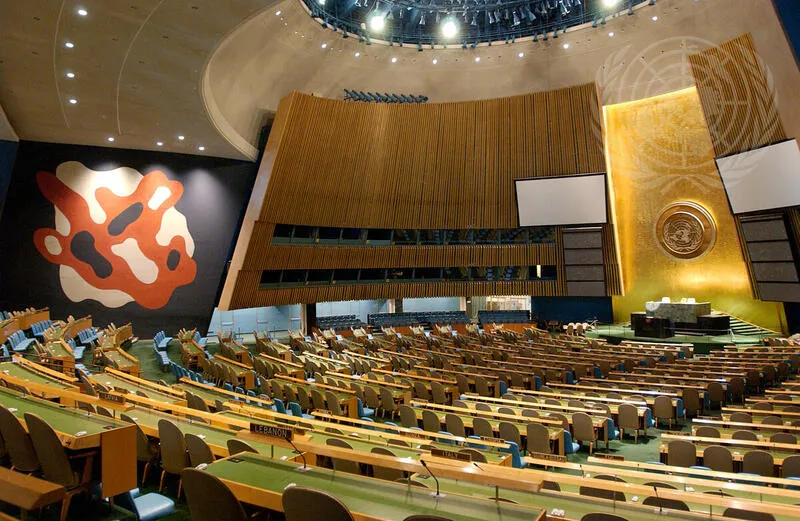
United Nations General Assembly Hall

The United Nations General Assembly Hall at UN Headquarters in New York. All 193 Member States have an equal voice. Photo: UN Photo/Sophia Paris

The United Nations General Assembly Second Committee — commonly known as UNGA2 or the Economic and Financial Committee — is one of the six Main Committees of the General Assembly. Its mandate originates from Chapters IX and X of the UN Charter, concerning international economic and social cooperation.

GA2 focuses on matters including global economic growth, sustainable development, poverty eradication, financing for development, and international economic cooperation. In the context of climate governance, GA2 serves as a platform for:

  • Promoting international dialogue on the economic dimensions of climate change
  • Encouraging cooperation between Member States on climate finance and technology transfer
  • Recommending policy frameworks for inclusive and equitable climate action
  • Supporting capacity-building initiatives for developing countries and marginalized communities

Important Limitation: As a General Assembly committee, GA2 does not possess legally binding enforcement powers. It cannot impose sanctions, compel domestic legislation, or mandate financial contributions. Its strength lies in consensus-building, normative guidance, and international coordination.

The committee works closely with ECOSOC, UNCTAD, UNDP, UNEP, and the Green Climate Fund — forming an interconnected network of institutions shaping the global response to climate change.

Conceptual Framework · Feminist Climate Justice

From "Women as Victims" to Feminist Climate Justice

Early climate discourse largely framed women as a "vulnerable group" — passive recipients of climate impacts. Studies documented how women in northern Nigeria, Chad, Bangladesh, and other regions faced disproportionate harm from droughts, floods, and resource scarcity.

However, feminist scholars, Indigenous activists, and Global South advocates increasingly challenged this narrow narrative. They argued that women are not simply victims — they are critical political actors, knowledge holders, and agents of transformation.

"Climate change must be understood within an economic system under which the drivers of climate change, environmental degradation and gender and social inequality are interconnected." — UN Women, Feminist Climate Justice: A Framework for Action, 2023

This conceptual shift gave rise to feminist climate justice, a framework that recognizes that centuries of colonialism, extractivism, patriarchy, and racism have simultaneously exploited both women's labor and the natural environment — especially in the Global South. The framework does not merely seek environmental sustainability; it calls for the transformation of the political and economic systems that produce inequality.

As philosopher Henry Shue argued as early as 1999, the clearest cases of climate injustice begin with "the initiation of global warming by the process of industrialization" — a process from which some benefited enormously while others bear the consequences.

Structural Analysis · Interconnection

Women, Nature and Structural Inequalities

Feminist political ecologists have long argued that both ecosystems and women's labor are treated as "infinitely elastic and costless" — despite jointly constituting the very foundation upon which economies depend. Water resources, soil fertility, climate regulation — alongside family care, community support, and reproductive labor — are rarely included in traditional economic indicators.

The framework introduces the principle of interdependence: the mutual reliance between humans, ecosystems, generations, and states. Rather than treating nature as an unlimited resource for extraction, it advocates for an "ethics of care" that prioritizes ecological sustainability and social well-being over profit-driven growth.

Equally important is the concept of intersectionality. Climate vulnerability and access to resources are not experienced uniformly among women. Race, class, disability, age, Indigenous identity, migration status, and sexuality all shape how individuals experience climate risks:

53.6×
Rise in rape rate among displaced women after Hurricane Katrina (Mississippi)
77%
of Cambodians reported worsened mental health due to slow-onset climate hazards

The data makes clear: climate governance cannot remain technocratic or purely emissions-focused. It must confront the structural inequalities embedded within global political and economic systems.

Norms · Treaties to Frameworks

The Evolution of Inclusive Climate Governance

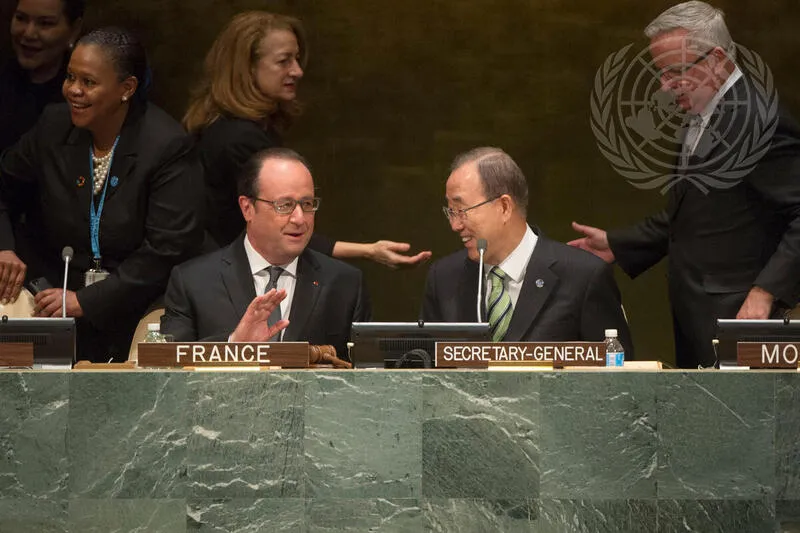
Paris Agreement signing ceremony 2016

Secretary-General Ban Ki-moon with President François Hollande at the opening of the Paris Agreement signing ceremony, 22 April 2016. Photo: UN Photo/Rick Bajornas

The international community's understanding of inclusive climate governance has evolved through multiple treaties and policy frameworks. Let us trace this evolution:

Key Milestones

YearInstrumentSignificance
1979CEDAWEstablished obligations to eliminate gender discrimination; later became normative basis for linking climate and gender
1992UNFCCCBegan formal global climate governance, but remained gender-blind
1995Beijing Platform for ActionRecognized women's participation in environmental decision-making as essential for sustainable development
2014Lima Work Programme on GenderFirst systematic UNFCCC effort to integrate gender into climate policy
2015Paris AgreementFirst climate treaty to explicitly acknowledge gender equality in climate action
2017Gender Action Plan (COP23)Institutionalized gender mainstreaming across all climate policy areas
2025+COP30 BelémNew phase: Global South voices, Indigenous communities, and Belém Gender Action Plan

A major turning point was the Paris Agreement, which adopted gender-responsive language — a victory strongly advocated by the Women and Gender Constituency. The subsequent Gender Action Plan institutionalized women's leadership, gender-responsive implementation, and capacity-building across all levels of climate governance.

Summary · Key Takeaways

From Committee to Concept to Action

GA2
Economic & Financial Committee — forum for inclusive climate governance discussions
1992→2025
33 years of normative evolution from UNFCCC to COP30
Intersectionality
Climate vulnerability is shaped by race, class, gender, and geography

Three core takeaways from this lecture:

  1. GA2's mandate matters — Climate governance is inseparable from economic cooperation, sustainable development, and resource distribution. The Second Committee is not a peripheral forum; it is central to shaping the international community's response.
  2. The paradigm has shifted — From viewing women as victims to recognizing them as agents of change. The feminist climate justice framework demands transformation of the underlying economic and political systems, not just technical fixes.
  3. International norms are evolving — From CEDAW through the Paris Agreement to the Gender Action Plan, the international community has progressively recognized that climate governance cannot be effective without being inclusive. But the journey is far from complete.

Looking Ahead to Lecture 2: How does climate change actually affect women's health, livelihoods, and security? We will examine the data and the lived experiences behind the statistics.

Reflection · Think Further

Questions for Deeper Reflection

💭 Thinking Questions

  1. [Comprehension] What are the key functions of UNGA2, and what are the limits of its mandate in the context of climate governance?
  2. [Analysis] Why did early climate governance frameworks remain "gender-blind" for so long, and what factors eventually pushed for the inclusion of gender perspectives?
  3. [Evaluation] Is the feminist climate justice framework an effective analytical tool for understanding the climate crisis, or does it risk oversimplifying complex global dynamics?
  4. [Application] As a delegate of a small island developing state in GA2, how would you argue for stronger gender-responsive climate finance mechanisms?

📚 Further Reading

  • UN Women (2023). Feminist Climate Justice: A Framework for Action
  • Shue, H. (1999). "Global Environment and International Inequality." International Affairs, 75(3)
  • UNFCCC. The Paris Agreement (full text)
  • Convention on the Elimination of All Forms of Discrimination against Women (CEDAW), 1979
  • UN Women (2026). Gender-Differentiated and Age-Specific Risks of Heat Stress in a Warming World

—— End of Lecture 1 ——
Next: The Gendered Impacts of Climate Change

00:00 00:00